
Key Takeaways
- Imam an-Nawawi's Forty Hadith is a deliberate selection, not a sampler. He chose 42 narrations that scholars had called foundations of the religion, and he explained his criteria in his introduction.
- He removed the chains of narrators to make the book easy to memorise, but almost every narration keeps a note on where it comes from. That note is the way back to the full collections.
- In the edition used in the Hadith Collection library, 33 of the 42 narrations carry the grade Sahih and 9 carry Hasan. "Forty" does not mean "all from Bukhari".
- The book matters because it is small. Read it as an index to the major collections, not as a finish line.
The usual advice about an-Nawawi's Forty Hadith is "start here, memorise it, then move on to the real books." I think that advice gets the order right and the reason wrong. The Forty Hadith is not a warm-up exercise. It is one of the most carefully designed entry points into hadith literature that we have, and its small size is the design.
My background is software engineering, not Islamic scholarship. I have spent eight years around systems where the hard part is choosing what to include: a minimal test suite that still covers the core behaviour, a short index that points to a large database. When I read an-Nawawi's own introduction, I recognise that kind of thinking. This post explains what he set out to do, what the text actually contains, and why I think readers should treat it as a map rather than a stepping stone. For rulings and detailed interpretation, please go to qualified scholars; this is a reader's view.
What is an-Nawawi's Forty Hadith?
The Forty Hadith (al-Arba'in) is a short collection of 42 narrations compiled by Yahya ibn Sharaf an-Nawawi (631-676 AH / 1233-1277 CE), a Shafi'i jurist who taught at the Dar al-Hadith al-Ashrafiyya in Damascus. Norman Calder describes his work as the point where earlier Shafi'i writing converged and from which later writing started (Calder, Cambridge University Press).
Despite its name, the book holds 42 narrations, not 40. Mohammad Gharaibeh's chapter in Hadith Commentary: Continuity and Change (Edinburgh University Press, 2023) states that al-Nawawi "compiled forty-two narrations on the principles of the religion" and calls the collection "by far the most popular" of the many forty-hadith books (Gharaibeh, Edinburgh University Press).
You can read all 42 in Arabic and English in the Forty Hadith of Imam an-Nawawi collection in our library. For where this book sits next to the six major collections, see the post The Six Major Hadith Books (Kutub al-Sittah) Explained.
The conventional view: a beginner's booklet
The common view is that the Forty Hadith is where children and new students begin. That view has good reasons behind it. The book is short, the narrations are well known, and memorising it has been a standard first step in Muslim education for centuries. Gharaibeh notes that these narrations "played and continue to play a significant role in the education of Muslims" (Gharaibeh).
The problem is the word "booklet". It suggests something introductory in content, something you outgrow. That is not how the author described it, and it is not how scholars treated it. Gharaibeh's chapter is about Ibn Rajab al-Hanbali's commentary on the collection, Jami' al-'Ulum wa-l-Hikam, a long scholarly work. Serious scholars wrote serious commentaries on this "beginner's" text, and those commentaries are still studied.
What an-Nawawi said he was doing
An-Nawawi explains his method in his introduction, and it is worth reading in his own words. In the English translation by Ezzeddin Ibrahim and Denys Johnson-Davies (hosted by the International Islamic University Malaysia), he says many scholars before him had compiled forty-hadith collections. He names Abdullah bin al-Mubarak as the first he knew of (IIUM).
He then says what made his collection different. Earlier compilers had gathered forty hadith on one theme, such as the basic rules of religion, subsidiary matters, asceticism, rules of conduct or sermons. He chose instead to gather forty hadith "more important than all of these", with each one being "one of the great precepts of religion" that scholars had described as "the axis of Islam" or "the half of Islam" (IIUM).
Three design decisions follow from that introduction:
- Selection by weight, not by topic. He was not covering a subject. He was picking the narrations that carry the most of the religion's principles.
- A quality rule. He says he made it a rule that the narrations be sound and that most of them come from the Sahihs of al-Bukhari and Muslim.
- No chains, on purpose. He writes: "I give them without the chains of authorities so as to make it easier to memorise them and to make them of wider benefit."
He is also open about one thing he did not rely on. He mentions the narration that promises a reward for preserving forty hadith and says hadith scholars agree it is weak, so he bases his work on sound narrations about conveying knowledge instead (IIUM). He made that distinction out loud, in the first pages of the book.
Why the small size is the point
From an engineering point of view, the third decision is the interesting one. Removing the isnad (the chain of narrators) makes the text shorter and easier to learn. But a quotation with no source is a dead end. An-Nawawi handled this by keeping a short source note on almost every narration. In our library's English text, many entries end with a bracketed tag such as [Muslim] or [Al-Bukhari] [Muslim], and others say in a sentence who related them, for example at-Tirmidhi or Ibn Majah.
That is the same pattern as a well-built index. The index entry is short so you can scan it and remember it; the pointer tells you where the full record lives. If you want the chain of narrators and the full context, the tag tells you which collection to open. Compare the complete source records before treating two wordings as identical.
Here is the first narration of the book, which also opens Sahih al-Bukhari:
I heard the Messenger of Allah (ﷺ) say: "Actions are (judged) by motives (niyyah), so each man will have what he intended. Thus, he whose migration (hijrah) was to Allah and His Messenger, his migration is to Allah and His Messenger; but he whose migration was for some worldly thing he might gain, or for a wife he might marry, his migration is to that for which he migrated."
Narrated by 'Umar bin al-Khattab. 40 Hadith Nawawi 1, graded Sahih. Read 40 Hadith Nawawi 1 in the library, the same narration as Sahih al-Bukhari 1, or 40 Hadith Nawawi 1 on Sunnah.com. The reader pages retain the complete supplied wording and reference.
What the data says about the 42 narrations
A careful reader should check claims like "they are all sahih" or "they are all from Bukhari". So I looked at the 42 records in the edition our library uses (the About the library page explains where its data comes from) and counted the grades each record carries. These are the grades as printed in the source data; I did not assign or change any.
| Grade in the record | Number of narrations | Share of 42 |
|---|---|---|
| Sahih | 33 | 79% |
| Hasan | 9 | 21% |
| Total | 42 | 100% |
Two things follow. First, the collection is not made only of sahih narrations; about one in five is graded hasan, a grade that is still accepted but sits below sahih. Keep each grade with its supplied attribution, and ask a qualified teacher about its application. Second, the source notes point to several books, not one. Many name al-Bukhari, Muslim or both, but others name different collections, for example at-Tirmidhi (hadith 11, 18, 29 and 42), Ibn Majah (31 and 39), ad-Daraqutni (30), al-Bayhaqi (33) and the Musnads of Ahmad and ad-Darimi (27). Hadith 12, for example, is a hasan narration related by at-Tirmidhi:
The Messenger of Allah (ﷺ) said, "Part of the perfection of one's Islam is his leaving that which does not concern him."
A hasan (good) hadeeth which was related by at-Tirmidhi and others in this fashion.
Narrated by Abu Hurayrah. 40 Hadith Nawawi 12, graded Hasan. 40 Hadith Nawawi 12 in the library · on Sunnah.com.
This matches what an-Nawawi said he would do: most of the narrations from the two Sahihs, but not all. The book is honest about its own sources. Readers should be too, and not repeat claims about it that the text does not support.
Three narrations that show the design
If the Forty Hadith is a set of foundations, you should be able to see whole areas of life inside single narrations. Three examples:
Sincerity as the core of religion.
The Prophet (ﷺ) said, "The deen (religion) is naseehah (advice, sincerity)." We said, "To whom?" He (ﷺ) said, "To Allah, His Book, His Messenger, and to the leaders of the Muslims and their common folk." [Muslim]
Narrated by Tameem ibn Aus ad-Daree. 40 Hadith Nawawi 7, graded Sahih. 40 Hadith Nawawi 7 in the library · on Sunnah.com.
How you treat others.
None of you [truly] believes until he loves for his brother that which he loves for himself. [Al-Bukhari] [Muslim]
Narrated by Anas bin Malik. 40 Hadith Nawawi 13, graded Sahih. 40 Hadith Nawawi 13 in the library · on Sunnah.com.
How you see this world.
The Messenger of Allah (ﷺ) took me by the shoulder and said, "Be in this world as though you were a stranger or a wayfarer." And Ibn Umar (may Allah be pleased with him) used to say, "In the evening do not expect [to live until] the morning, and in the morning do not expect [to live until] the evening. Take [advantage of] your health before times of sickness, and [take advantage of] your life before your death."
[Al-Bukhari]
Narrated by Abdullah ibn Umar. 40 Hadith Nawawi 40, graded Sahih. 40 Hadith Nawawi 40 in the library · on Sunnah.com.
Each of these is short enough to memorise in a day. Each also opens onto a large body of explanation in the commentaries. That pairing, short text and deep commentary, is exactly what an index entry should give you.
A better way to use the book
If the Forty Hadith is an index, then the way you use it changes. Here is the approach I would suggest to any reader, with the usual caveat that a teacher's guidance comes first.
- Memorise the text, and the source note with it. Learn "[Muslim]" or "related by at-Tirmidhi" as part of the narration. It is the pointer that keeps the text connected to its source. The library's source notes explain how these references are preserved.
- Follow at least one pointer per narration. Open the collection it names and find the full narration with its chain. Our library search and the Sahih al-Bukhari collection are good places to start.
- Read one classical commentary alongside it. Ibn Rajab's Jami' al-'Ulum wa-l-Hikam, the subject of Gharaibeh's chapter, is one well-known example. Commentaries are where the "foundations" become clear.
- Then widen out. An-Nawawi also compiled the larger Riyad as-Salihin, which is a natural next book; see Riyad as-Salihin: How to Read the Gardens of the Righteous.
For a daily routine, use the daily hadith guide. Return to the 42-record collection index to choose the next passage.
Why this small book still matters
The Forty Hadith matters because it solves a problem every large body of knowledge has: where do you begin, and how do you avoid getting lost? An-Nawawi's answer was to choose a small number of narrations that carry the most weight, state his rules openly, strip the text down for memory, and keep a pointer back to the source.
Treating it as a beginner's pamphlet you finish and leave behind misses that. A better habit is to keep coming back to it, each time following a few more pointers into the major collections. In my experience as an engineer, a good index is something you use for years, not something you graduate from.
Sources
- Norman Calder, "Nawawi and the Typologies of Fiqh Writing", in Islamic Jurisprudence in the Classical Era, Cambridge University Press, 2010: cambridge.org
- Mohammad Gharaibeh, "Ibn Rajab's Commentary on al-Nawawi's Forty Hadith", in Hadith Commentary: Continuity and Change, Edinburgh University Press, 2023: cambridge.org
- An-Nawawi's introduction, English translation by Ezzeddin Ibrahim and Denys Johnson-Davies, hosted by the International Islamic University Malaysia: iium.edu.my
- Narrations: Hadith Collection library, Forty Hadith of Imam an-Nawawi, hadith 1, 7, 12, 13 and 40, with matching pages on Sunnah.com. Grade counts are from the same library records.
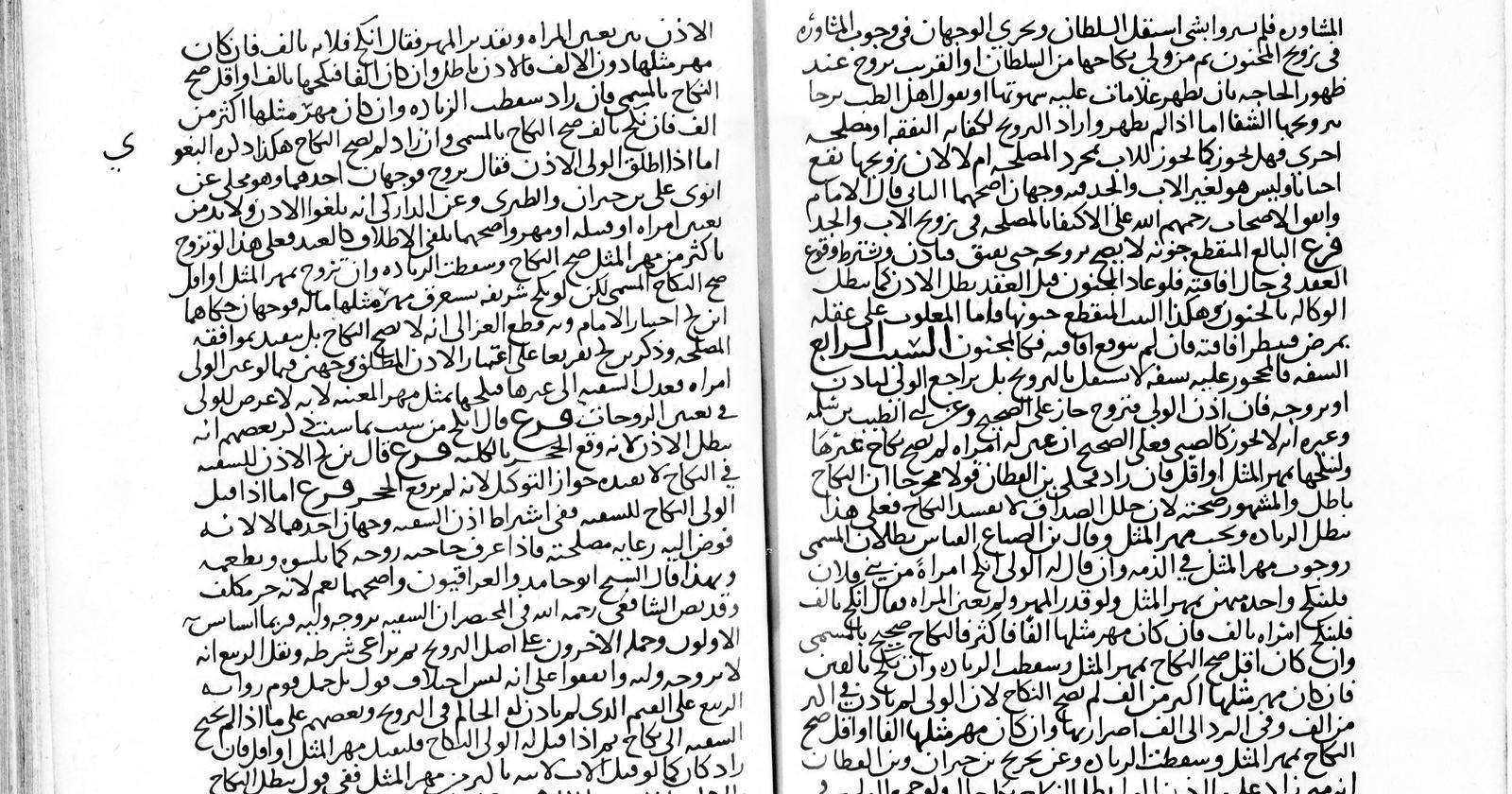
- Hero image: a page from an-Nawawi's al-Rawda, a Shafi'i law work (not the Forty Hadith), Bibliothèque nationale de France, Département des Manuscrits, Arabe 6449, public domain, via Wikimedia Commons
